
Introduction
In today’s fast digital world, website speed plays a very important role. Users expect websites to load quickly, and if a page takes too long, they leave instantly. This directly affects your traffic, user experience, and search engine rankings.
One of the main reasons behind slow websites is large page size. Many website owners focus on design and content but ignore how heavy their pages become over time. This is where the Page Size Checker by SpellMistake becomes extremely helpful.
This tool helps you understand how much data your webpage uses and how it impacts performance. In this guide, we will explain everything in simple language — from how page size works to how you can improve it using smart techniques.
What Does Page Size Mean?
Page size refers to the total amount of data that loads when someone opens your webpage. This includes everything such as images, videos, CSS files, JavaScript, fonts, and other resources.
When a visitor clicks on your website, their browser downloads all these elements. If the total size is large, it takes more time to load.
Think of it like downloading a file. A small file downloads quickly, but a large file takes more time. The same logic applies to web pages.
Using the Page Size Checker by SpellMistake, you can measure your page size easily and understand how heavy your website really is.
Why Page Size Matters in 2026
Page size has become more important than ever in 2026. With increasing mobile users and faster expectations, even a few extra seconds can make a big difference.
Users do not like waiting. If your page loads slowly, they may leave and visit another website. This increases bounce rate and reduces engagement.
Search engines also consider page speed as a ranking factor. A larger page size slows down loading time, which can lower your rankings.
By using the Page Size Checker by SpellMistake, you can keep your website optimized and competitive.
How Page Size Affects Website Speed
Website speed is directly connected to page size. The larger your page, the more data needs to be loaded.
If your page includes large images, heavy scripts, or unnecessary files, it will take longer to load. This affects both desktop and mobile users.
Slow loading pages create frustration. Users may not wait for the page to fully load, leading to lost traffic.
The Page Size Checker by SpellMistake helps you identify heavy elements so you can reduce them and improve speed.
Features of Page Size Checker by SpellMistake
The Page Size Checker by SpellMistake comes with several useful features that make it easy to analyze your website.
It provides quick results, allowing you to check your page size within seconds. The tool is simple and user-friendly, making it accessible for beginners.
It works on all devices, including mobile and desktop. You do not need any special software or technical knowledge to use it.
Another important feature is accuracy. The tool gives precise data, helping you make better decisions for optimization.
How to Use Page Size Checker by SpellMistake
Using the tool is very easy. You just need to follow a few simple steps.
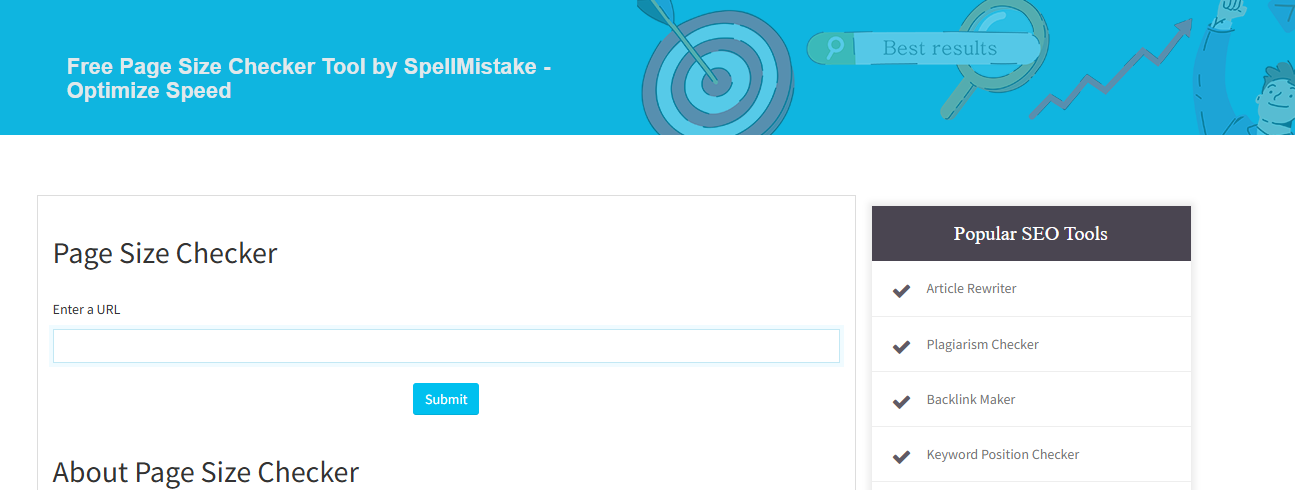
First, open the Page Size Checker tool. Then enter your website URL in the input box. After that, click the check button.
Within a few seconds, the tool will show your page size. You can analyze the results and decide what needs improvement.
This simple process helps you monitor your website regularly and maintain performance.
Ideal Page Size for Better Performance
There is no fixed rule for page size, but experts recommend keeping it as small as possible.
A page size under 1 MB is considered excellent. It loads quickly and provides a smooth user experience.
Pages between 1 MB and 3 MB are acceptable but may need optimization. Anything above 3 MB is considered heavy and should be improved.
Using the Page Size Checker SpellMistake, you can compare your results with these benchmarks and take action.
Common Reasons for Large Page Size
Many factors contribute to large page size. One of the most common reasons is unoptimized images. High-quality images look good but increase file size.
Another reason is too many scripts and plugins. These add extra weight to your page.
Unused code and poor website design also increase page size. Sometimes, third-party tools and ads can make pages heavier.
By identifying these issues with the Page Size Checker by SpellMistake, you can fix them effectively.
How to Reduce Page Size Easily
Reducing page size is not difficult if you follow the right steps. Start by compressing images. Use modern formats like WebP to reduce size without losing quality.
Next, remove unnecessary plugins and scripts. Only keep what is required.
Minify your code by removing extra spaces and unused lines. This makes your files smaller.
Using caching and CDN services can also improve loading speed.
Regularly checking your website with the Page Size Checker by SpellMistake ensures continuous improvement.
Importance of Mobile Optimization
Most users access websites through mobile devices. Mobile networks are often slower, making page size even more important.
A heavy website may work fine on desktop but perform poorly on mobile. This can result in loss of traffic.
Optimizing your page size ensures better performance on all devices.
The Page Size Checker by SpellMistake helps you maintain a mobile-friendly website.
Impact on SEO and Rankings
Page size plays a major role in SEO. Search engines prefer fast-loading websites.
If your page size is large, it slows down loading time. This affects your ranking and reduces visibility.
A smaller page size improves crawlability. Search engines can easily access and index your content.
Using the Page Size Checker by SpellMistake, you can improve your SEO performance and attract more visitors.
Real-Life Benefits of Optimizing Page Size
Optimizing page size has many real-life benefits. It improves user experience and keeps visitors engaged.
It also increases conversion rates. A fast website encourages users to take action.
Better performance leads to higher search engine rankings and more traffic.
Regular use of the Page Size Checker by SpellMistake helps maintain these benefits.
Advanced Optimization Techniques
For better results, you can use advanced techniques. Lazy loading helps load images only when needed.
Combining files reduces the number of requests made by the browser.
Using modern frameworks and lightweight themes can also reduce page size.
Monitoring performance regularly ensures long-term success.
Future of Website Performance
In the future, website performance will become even more important. Users will expect faster loading times and smoother experiences.
New technologies will help improve speed, but page size will still remain a key factor.
Tools like Page Size Checker by SpellMistake will continue to help users optimize their websites.
Staying updated with trends will give you a competitive advantage.
Conclusion
The Page Size Checker by SpellMistake is a powerful tool for improving website performance. It helps you understand your page size and identify areas for improvement.
By reducing page size, you can improve speed, user experience, and SEO rankings.
In 2026, having a fast website is not optional — it is necessary. Regular monitoring and optimization will help you stay ahead.
Using this tool consistently will ensure your website remains fast, efficient, and successful.